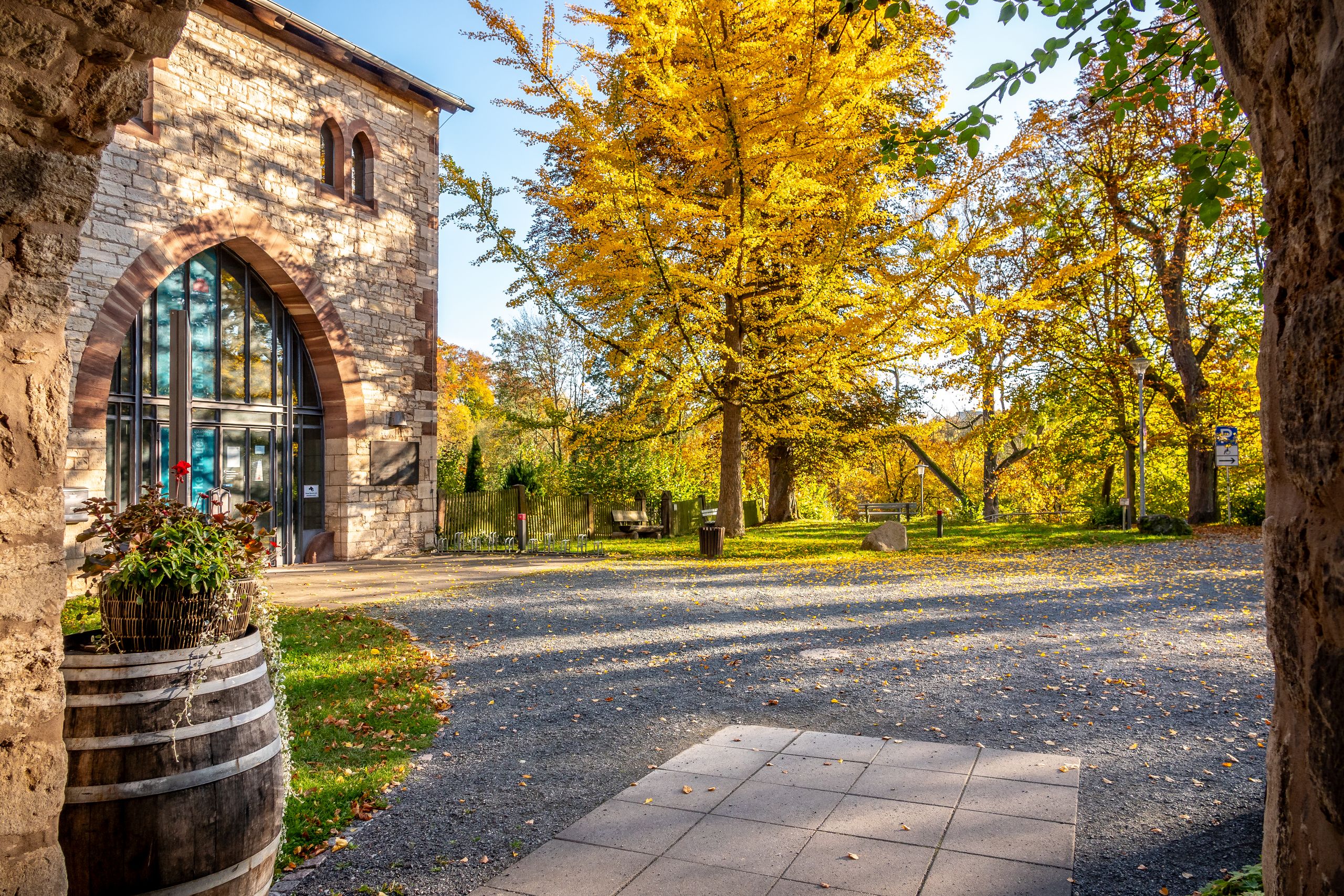
In 852, the Saxon Count Liudolf and his wife Oda founded the Gandersheim Convent at their manor house in Brunshausen. A few decades later, with the construction of the collegiate church, religious life shifted to Gandersheim. Brunshausen, however, remained an important site in the history of the convent.
Over the centuries, a Benedictine monastery was first established on the monastery hill, followed later by a convent of Benedictine nuns. During the Baroque period, the Princess-Abbess Elisabeth Ernestine Antonie had the so-called Summer Palace built, which served as a stately summer residence and as a home for her art and natural history collections.
Today, the “Portal to History” invites visitors to discover more than 1,000 years of history in authentic settings. At Brunshausen Summer Palace, the history of the site is vividly recounted, from the beginnings of the Gandersheim Convent right up to the modern era. The exhibition “Baroque Passion for Collecting” offers fascinating insights into the collecting culture of Princess-Abbess Elisabeth Ernestine Antonie and the Baroque world of the Summer Palace.
In addition, there is an exhibition dedicated to the history of the Gandersheim satellite concentration camp, which was established in 1944–45 in the former monastery. It sheds light on the fates of the prisoners and the role played by Brunshausen during the Nazi era.
Today, Brunshausen is a peaceful destination offering exhibitions, guided tours, events and cafés – a place where history remains tangible in many different ways.