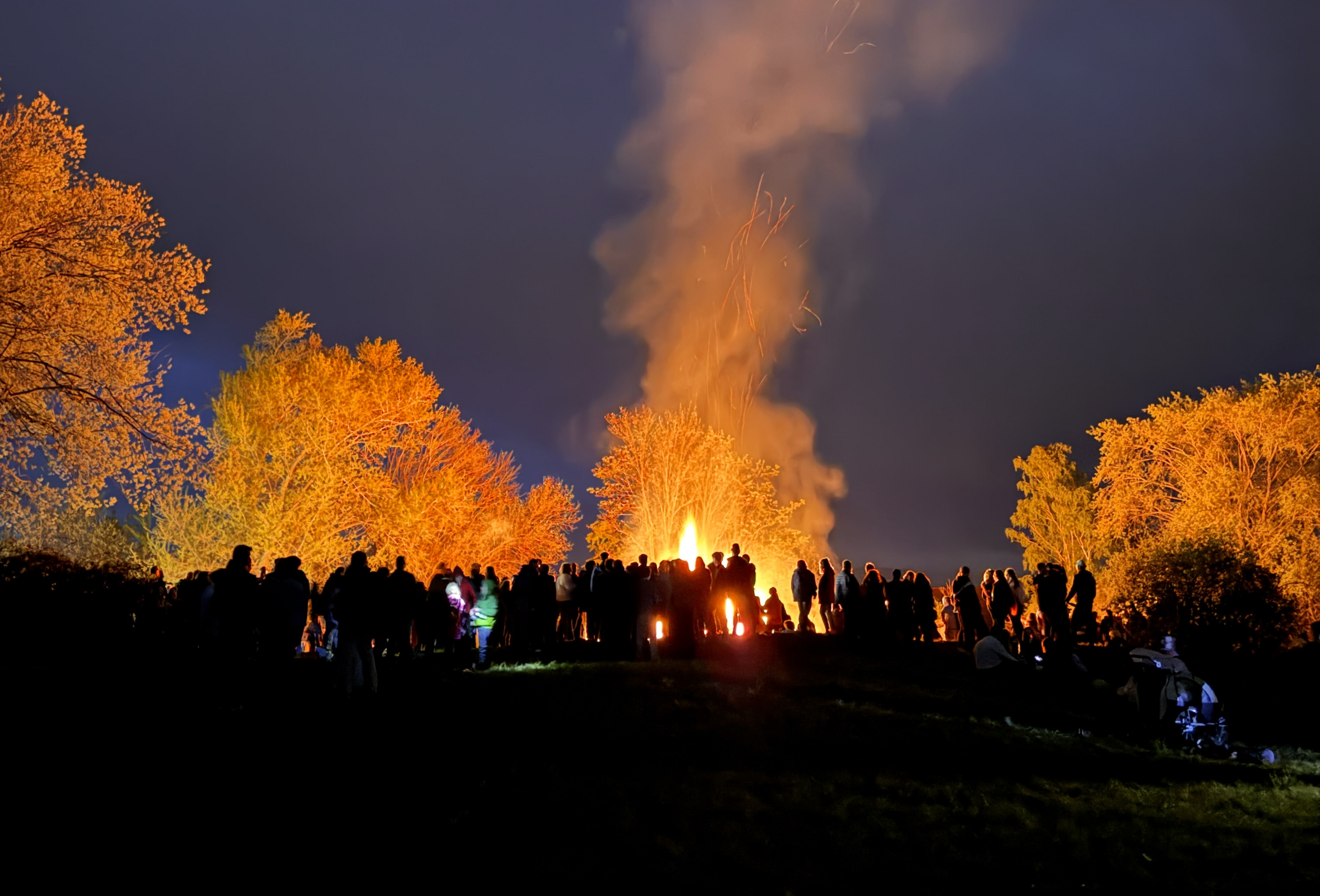
The radiant light and the warming glow, as well as the mystical sight of the “torch swingers” and the lucky “blackeners”, arouse curiosity every year about the origin of these traditions. And they awaken the desire to be part of it yourself one day.
When, at nightfall on Easter, the bonfires burn in many Harz towns, the Harz appears to be “in flames”.
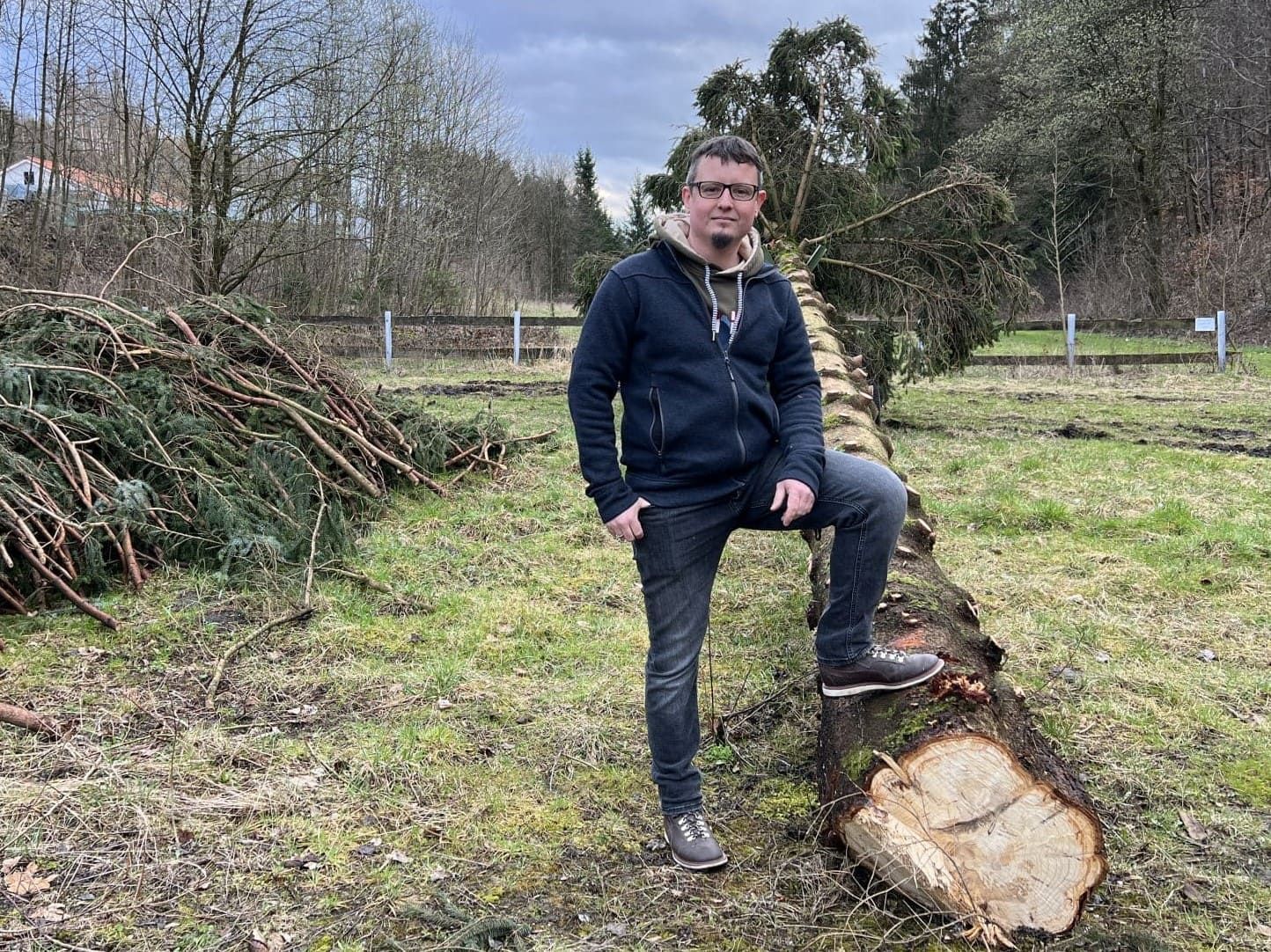
Traditionally, the custom of lighting a fire was meant to drive away winter. It was probably believed that the glow of the fire would protect the sprouting seeds from evil spirits. The fires were therefore considered a ritual act to ensure fertility, growth and harvest. In many towns in the Upper Harz, Easter fires have been stacked in the form of artfully built bonfires for several hundred years. In the centre of a pile of branches and twigs, a 16 to 20 metre high, crowned spruce pole is erected as a maypole. Dry branches and spruce twigs are stacked between supporting poles, forming an impressive mound up to twelve metres in diameter. On top, it is covered with a layer of green spruce branches. At dusk, the pile is lit from the inside, so that at first only thick clouds of smoke flow through the valleys and over the heights of the Harz until the first flames break through the branches.
Before the Easter bonfire burns brightly, the traditional torch swinging and blackening create a special magic around the pile. When swinging the Easter torches, burning wooden torches are spun in circular movements over the head. The circles of flame created by the torch swingers amplify the mystical image of the Harz Mountains. During “blackening”, people’s faces are smeared with soot-blackened hands. This is said to bring good luck and, above all, is a lot of fun for younger visitors. Around the Easter fires, guests and locals celebrate a cheerful festival together late into the night.