© A. Lehmberg

German Unity in the Harz

35 Years of Reunification

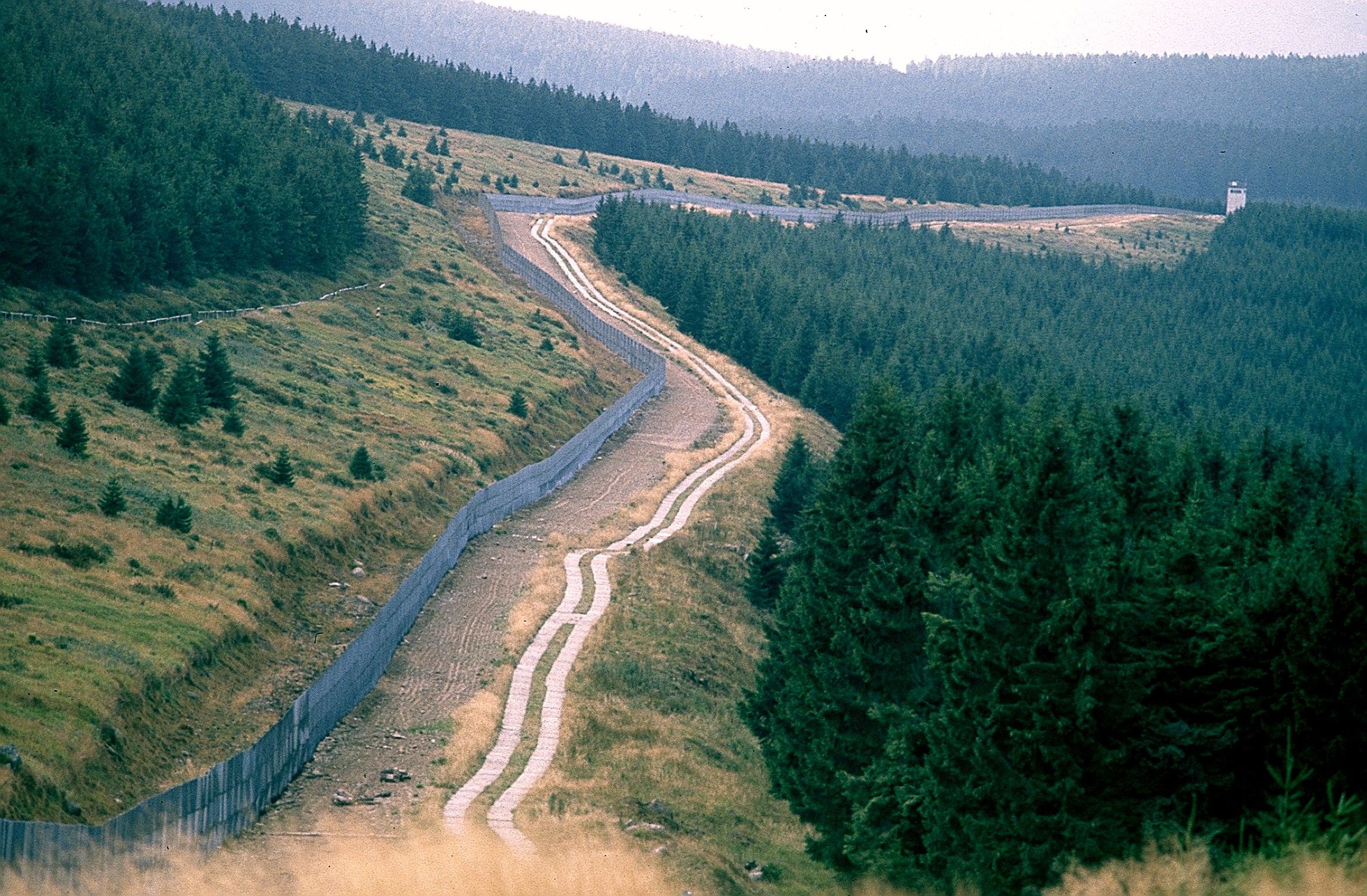
Die innerdeutsche Grenze im Harz vor 1989
© Klaus Lehmberg

For almost 40 long years, the “Iron Curtain” separated people and nature throughout Europe. Nowhere was the inner-German border felt as painfully as in the Harz. For example, the Brocken – an impressive and widely visible symbol of the Harz – could only be viewed from afar by people from both East and West for many years.

This time of division, but also the process of reunification, left a deep mark on the people of the Harz and the region itself. Even today, there is still much to discover along the former border strip relating to this chapter of history.

For people, the border was insurmountable and often even deadly. But for nature, it was a blessing: in the shadow of the border, endangered animals and plants found an undisturbed home. Today, the former border strip stretches across Europe as the “Green Belt” – a treasure trove of biodiversity.

The Green Belt

from death strip to lifeline

An idea is born
The border from Scandinavia’s Arctic Ocean to the Black Sea was once an insurmountable barrier. The Iron Curtain divided Germany into East and West. After the fall of the Berlin Wall in 1989, it became clear that valuable wilderness had developed under the protection of the border installations. Conservationists preserved these areas as the “Green Belt”, one of Europe’s largest nature conservation projects.

String of pearls
The Green Belt stretches across 23 countries and 12,500 kilometres. It connects and protects a variety of landscapes such as marshes, heaths, and forests. Together, they form one of the world’s longest “biotope networks”, providing habitats and migration routes for many animal species.

Danger imminent
In Germany, the Green Belt stretches over 1,400 kilometres with 109 habitats. However, it is under threat from agriculture and infrastructure, which cause it to become narrower. Landscape managers are working to preserve this diverse mosaic of habitats. 

The Green Belt in the Harz
Today, the Harz region also shows a new face: along the former death strip winds – rich in attractions – the life-giving Green Belt: natural beauty meets cultural treasures. Adventurous excursions go hand in hand with moments of contemplation. And you can hike to your heart’s content … through pure wilderness or in the footsteps of German history.

© HTV / A. Lehmberg

You might also be interested in:

Accommodation

Hotel Braunschweiger Hof - Ingo Wandmacher | CC-BY-SA

Sights

Wernigerode Tourismus GmbH, Jens Friedrich | CC-BY

Hiking in the Harz