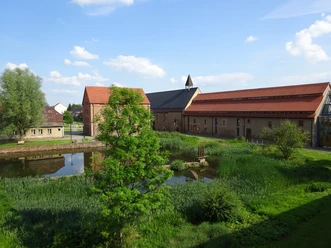

From the 10th to the 12th century, an important imperial palace stood here. In the 13th and 14th centuries, a castle was built, which was converted into a spacious palace complex beginning in the 16th century.
The main attraction is the late-Gothic castle kitchen, featuring one of the largest chimney flues in European castle architecture. Some of the defensive structures are still functional. In 1524, the reformer Thomas Müntzer delivered his famous “Prince’s Sermon” in the court hall. In the 18th century, Goethe wrote parts of “Iphigenia” at Allstedt Castle.
Parts of the castle are currently undergoing extensive renovation. The black kitchen is open to visitors. In the Hofstube, the story of Thomas Müntzer comes to life in a multimedia show featuring stunning visuals and sound. In the east wing of the castle, a modern exhibition invites visitors to delve deeper into the life of the reformer and his relevance that continues to this day.
The main attraction is the late-Gothic castle kitchen, featuring one of the largest chimney flues in European castle architecture. Some of the defensive structures are still functional. In 1524, the reformer Thomas Müntzer delivered his famous “Prince’s Sermon” in the court hall. In the 18th century, Goethe wrote parts of “Iphigenia” at Allstedt Castle.
Parts of the castle are currently undergoing extensive renovation. The black kitchen is open to visitors. In the Hofstube, the story of Thomas Müntzer comes to life in a multimedia show featuring stunning visuals and sound. In the east wing of the castle, a modern exhibition invites visitors to delve deeper into the life of the reformer and his relevance that continues to this day.