© Fotoweberei & Schloß Wernigerode GmbH

Brocken House

1820

The motif

For most of Earth's history, the Brocken had no guesthouse. This painting shows the oldest Brockenhaus. It was built in 1799 and, after several alterations, stood until it was destroyed in the Second World War — exactly where the Brockenhotel with its restaurant stands today. At 1,141 metres above sea level, the Brocken is home to the highest hotel and restaurant in Northern Germany.

Carl Gustav Carus painted the Brockenhaus in 1820 from a north-eastern angle. On the left-hand side you can see part of the "Wolkenhäuschen", which was built in 1736. This small stone weather hut with a wooden pointed roof, moss in the stone joints, and a bench inside was the only building up here when Goethe visited in 1777.

The painting reflects the artist’s very personal experience of the Brocken. It is early morning — the foreground is still cool and dark. On 30 August 1819, Carus signed the guestbook at the Brocken inn. Like the visitors at the viewing tower, he had stayed overnight in the Brockenhaus and must have been outside before five in the morning. As a keen observer, he was fascinated by the scattered rocks, which were glowing with a kind of halo in the backlight. Normally, painters try to capture the main façade of a building, where a levelled path already led to the entrance of the Brockenhaus. But there he would have had no backlight, fewer rocks, and no "Wolkenhaus" in the foreground. So Carus accepted showing the back of the building with its shed and garden, as well as the tower behind rather than in front of the inn, which he placed according to the golden ratio in his composition. He gave this painting to Goethe as a gift.
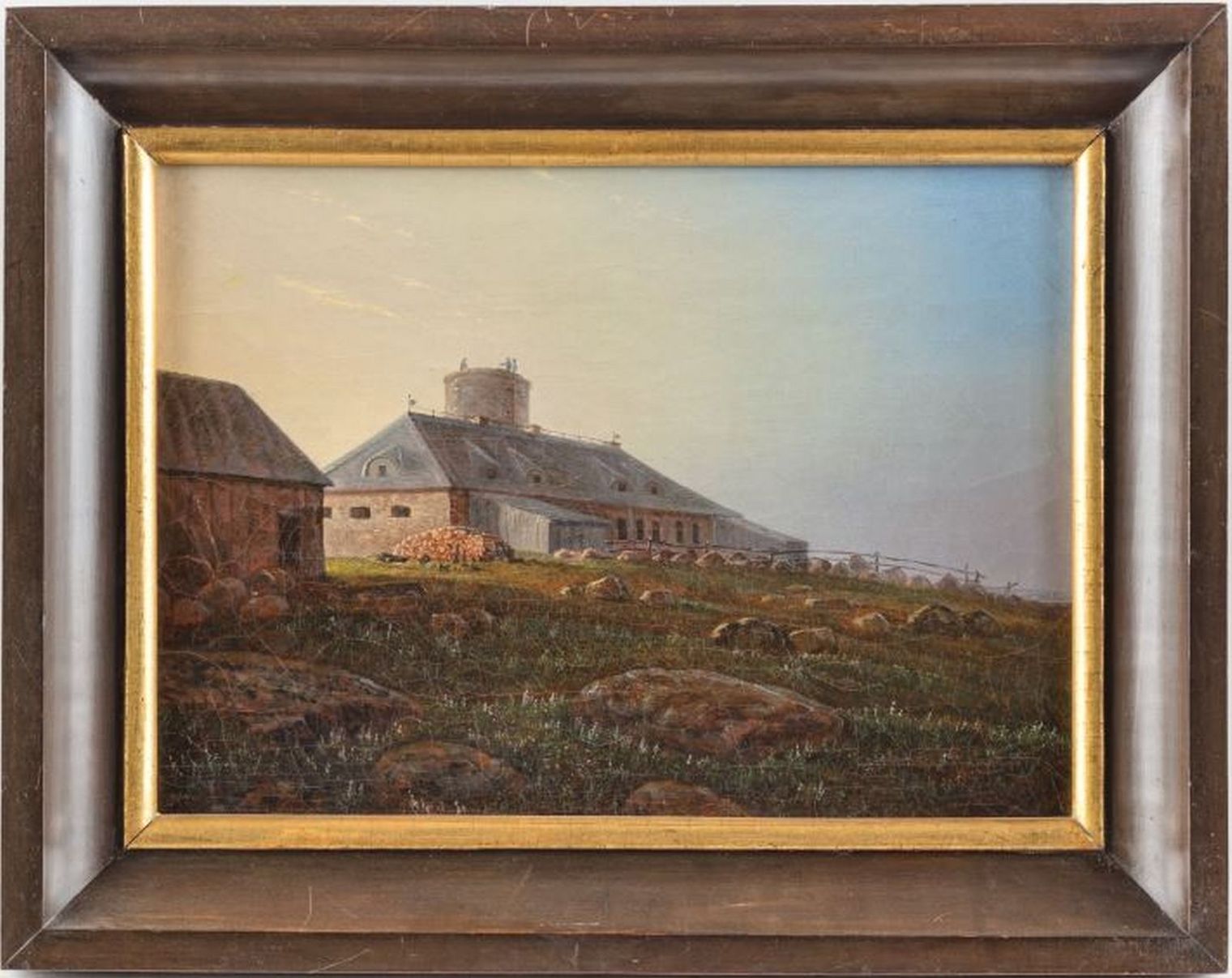
Brockenhaus, Carus
© Klassik Stiftung Weimar
Carl Gustav Carus

Artist

1820

created

Oil on canvas

21.2 x 28.9 cm

Klassik Stiftung Weimar/Museums (Goethe’s collection)

Inv. no. GGe/444

Hiking tip

Whether from Ilsenburg, Schierke, Elend, Torfhaus or Oderbrück – many paths lead to the Brocken.
Find all the routes to the Brocken >>here!

About the artist

Carl Gustav Carus (1789–1869) was a famous doctor and writer in Dresden, and also a natural scientist who admired Goethe. As such, he was a Neptunist like Goethe, believing that rocks were formed through water and pressure – not through fire like the Plutonists (Volcanists), who would later be proven right. From 1818 onwards, he was in correspondence with Goethe, knew about his journey through the Harz Mountains, and gave him this and other paintings as gifts. If he had hoped to be invited by Goethe to Weimar and to engage in a more intensive exchange, then he succeeded. Carus felt a spiritual connection to the multifaceted Goethe and sought approval for his artistic work. Goethe, in turn, could receive professional insights from the doctor for his anatomical theories.

For comparison

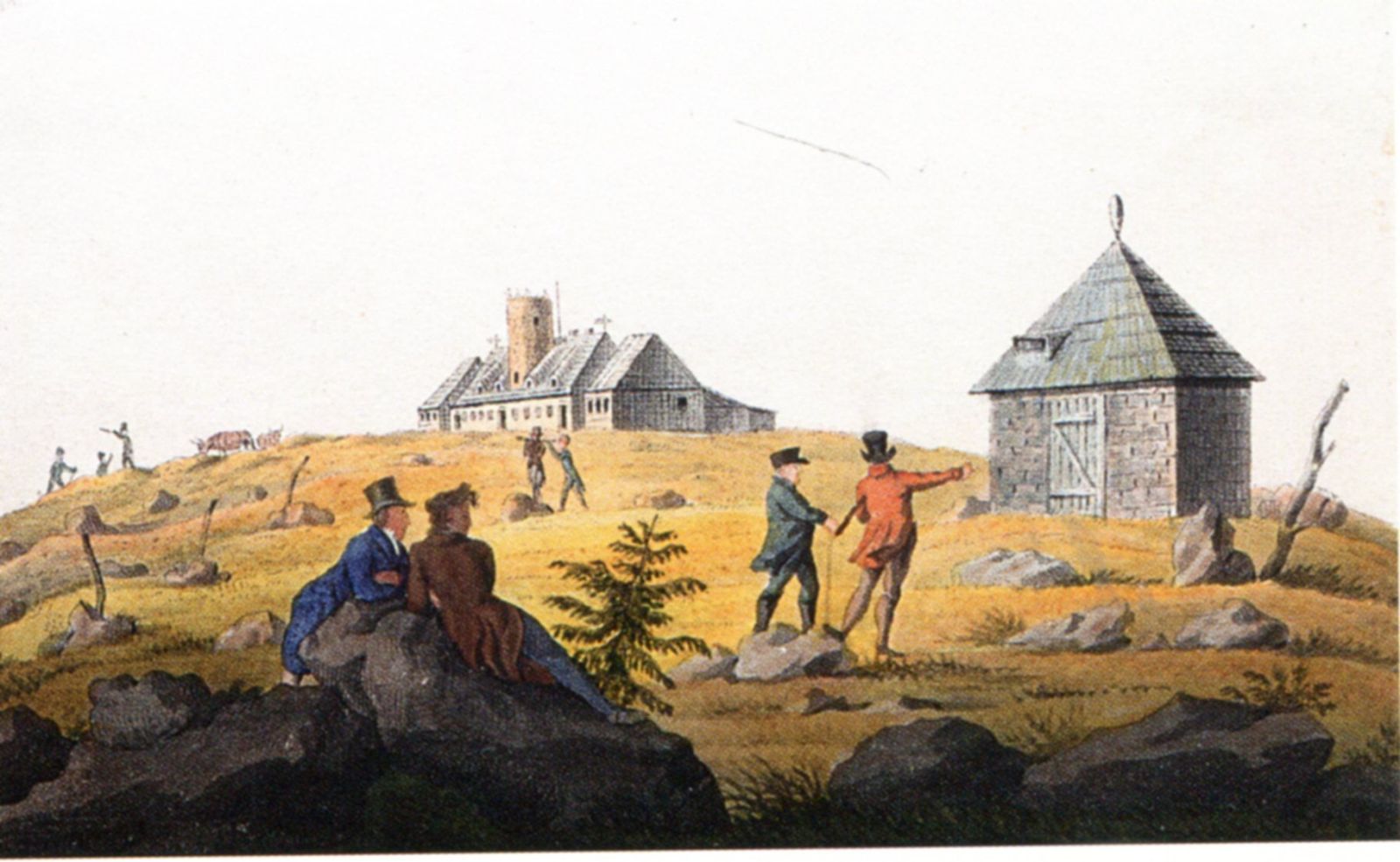
Anonymous, The Brockenhaus and the Cloud Cottage from the southeast, 1820, etching, image size 8.5 x 13.4 cm, plate size 9.7 x 15.9 cm, Bode Collection, Hamburg 

Brockenhaus, Anonym
© Sammlung Bode, Hamburg

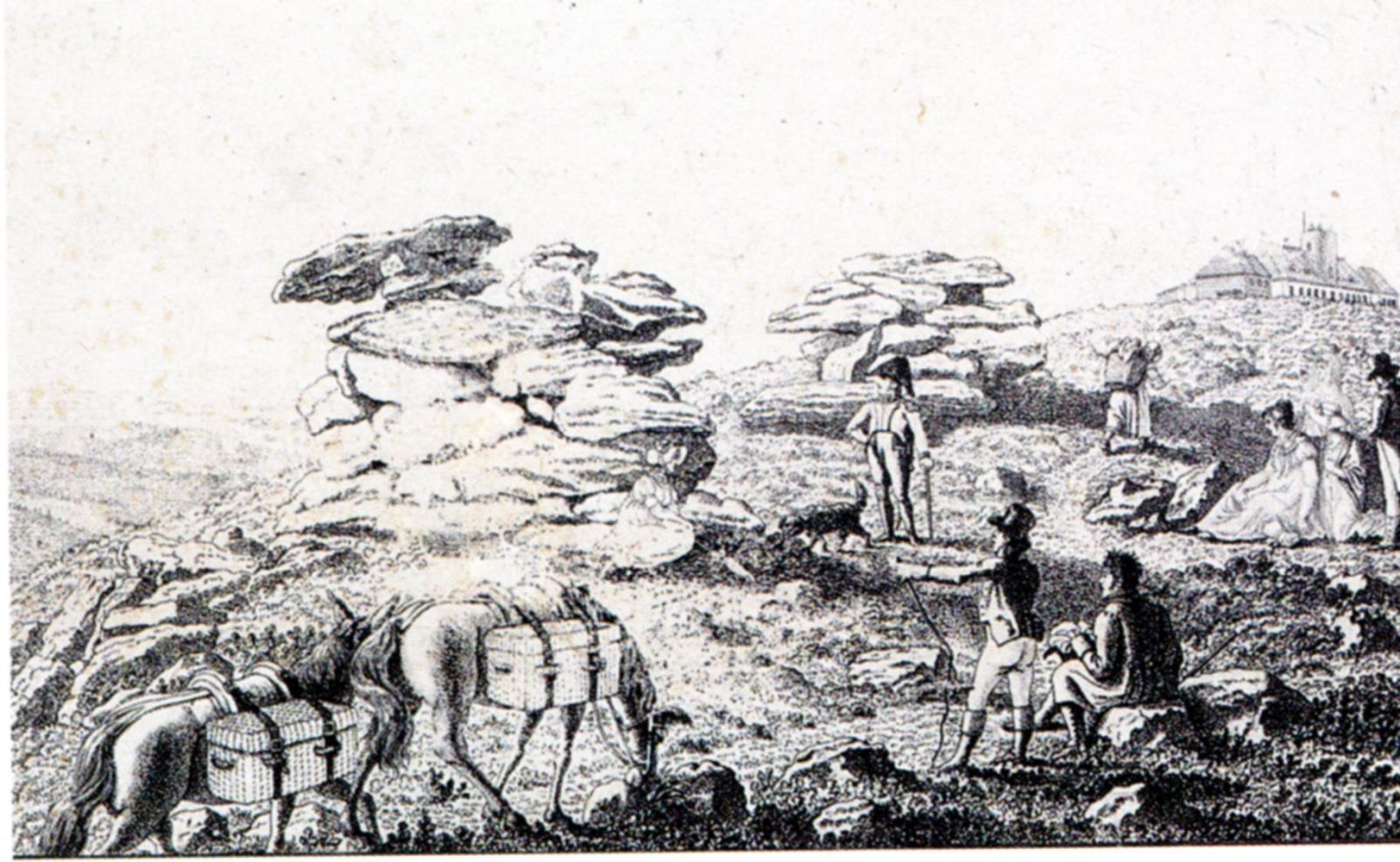
Eberhard Siegfried Henne, Arrival on the Brocken (The Brockenhaus from the southwest with the Devil’s Pulpit), around 1810, etching, plate size 21.7 x 14.4 cm, Bode Collection, Hamburg

Brockenhaus, Henne
© Sammlung Bode, Hamburg

Printed views of the Brocken from the time when Carus was up here also show us the other sights on the mountain: the Cloud Cottage, the Brockenhaus with its viewing tower, and the famous rocks that were already called Witch’s Pulpit and Devil’s Altar back then. Donkeys carried luggage for tourists up the mountain.