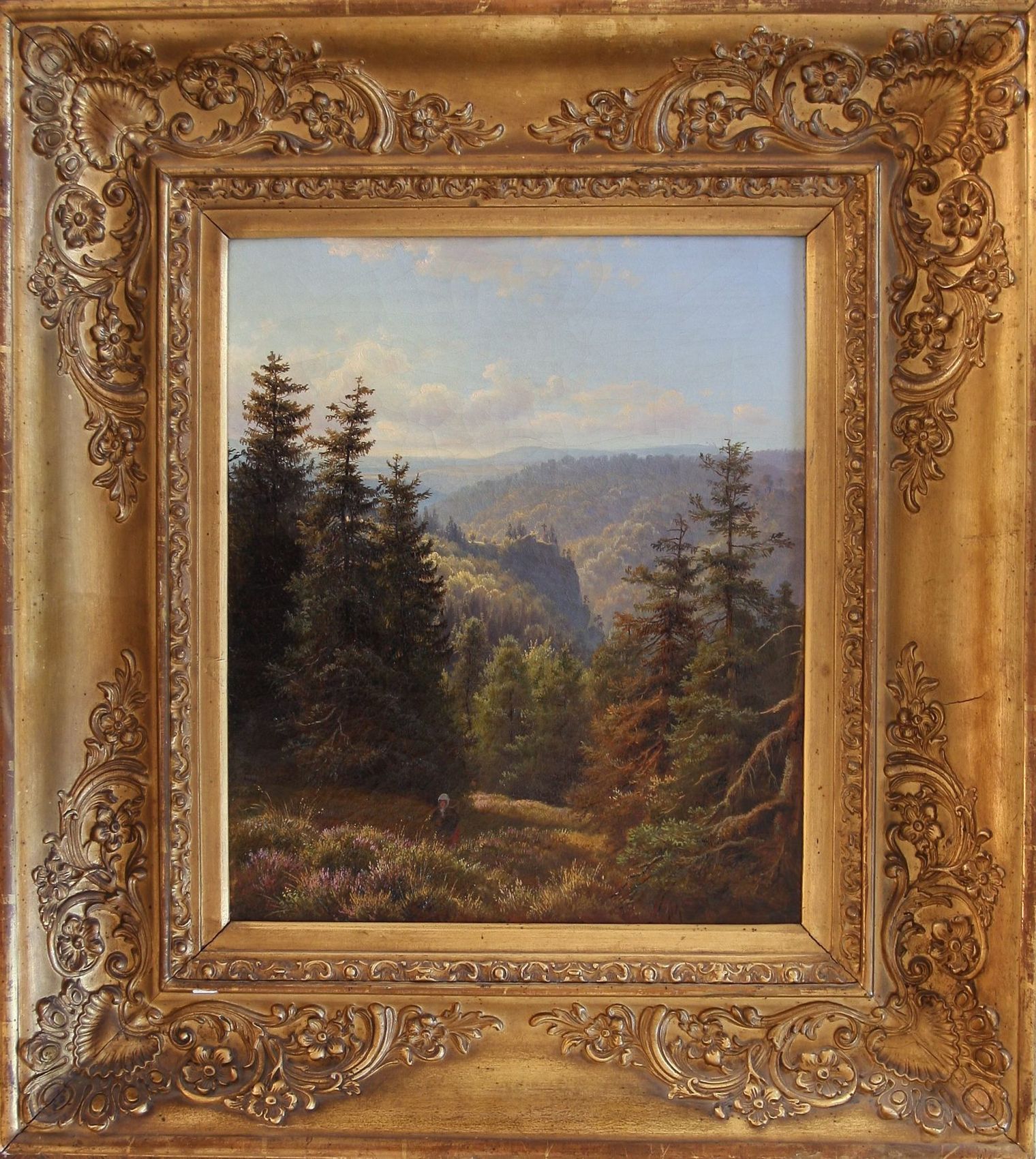
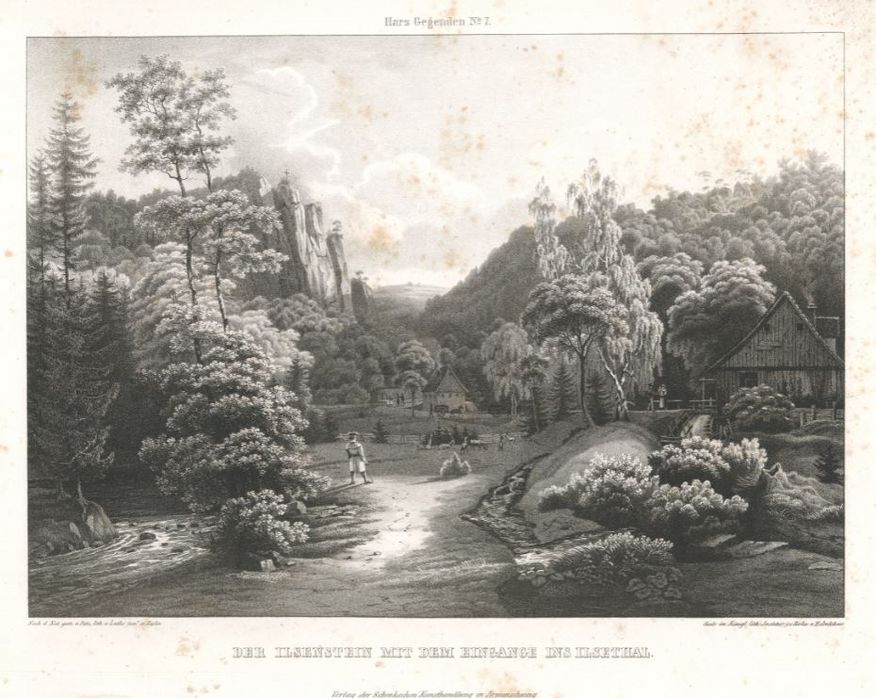
The Ilsestein is a mighty granite rock. It used to be a popular spot for painters because one could combine a walk through the Ilse Valley and its ascent with the climb to the Brocken. From Ilsenburg to the Brocken therefore runs a historic painters’ trail.
Georg Heinrich Crola does not choose the usual view from the valley with the mill and hikers on the path, as our comparison images show. He lifts the Ilsestein out of the ordinary, giving it a halo of sunlight. Could it be the light that, according to legend, Princess Ilse left behind when she combed her hair here? In Crola’s painting, it is a late summer afternoon and a deep calm lies over the valley. The cross, which has stood on the Ilsestein since October 1814, is almost exactly in the centre of the picture. In his painting, Crola gives nature something solemn, and one almost overlooks the woman with the basket climbing up the slope. The view is framed, on the left by greening and on the right by dying spruces — because dying is part of living.
It may well be that he portrays nature in such an unusual way to show its beauty and to encourage people to preserve it rather than destroy it. He also clearly expressed his regret about activity driven only by quick gain in his memoirs. The original painting can be viewed at Wernigerode Castle, inviting reflection on this very question.