He sometimes even becomes a royal midwife when the queen has trouble seeing the light of day. "That’s not so easy with these mighty fingers!", Henning Illers says with a smile, looking at his large hands. The beekeeper, now known as the Bee Man of Wieda, knows how to captivate his audience with stories like these – whether in the tiny farm shop, at trade fairs, markets or on the bee trail by the local bell tower.
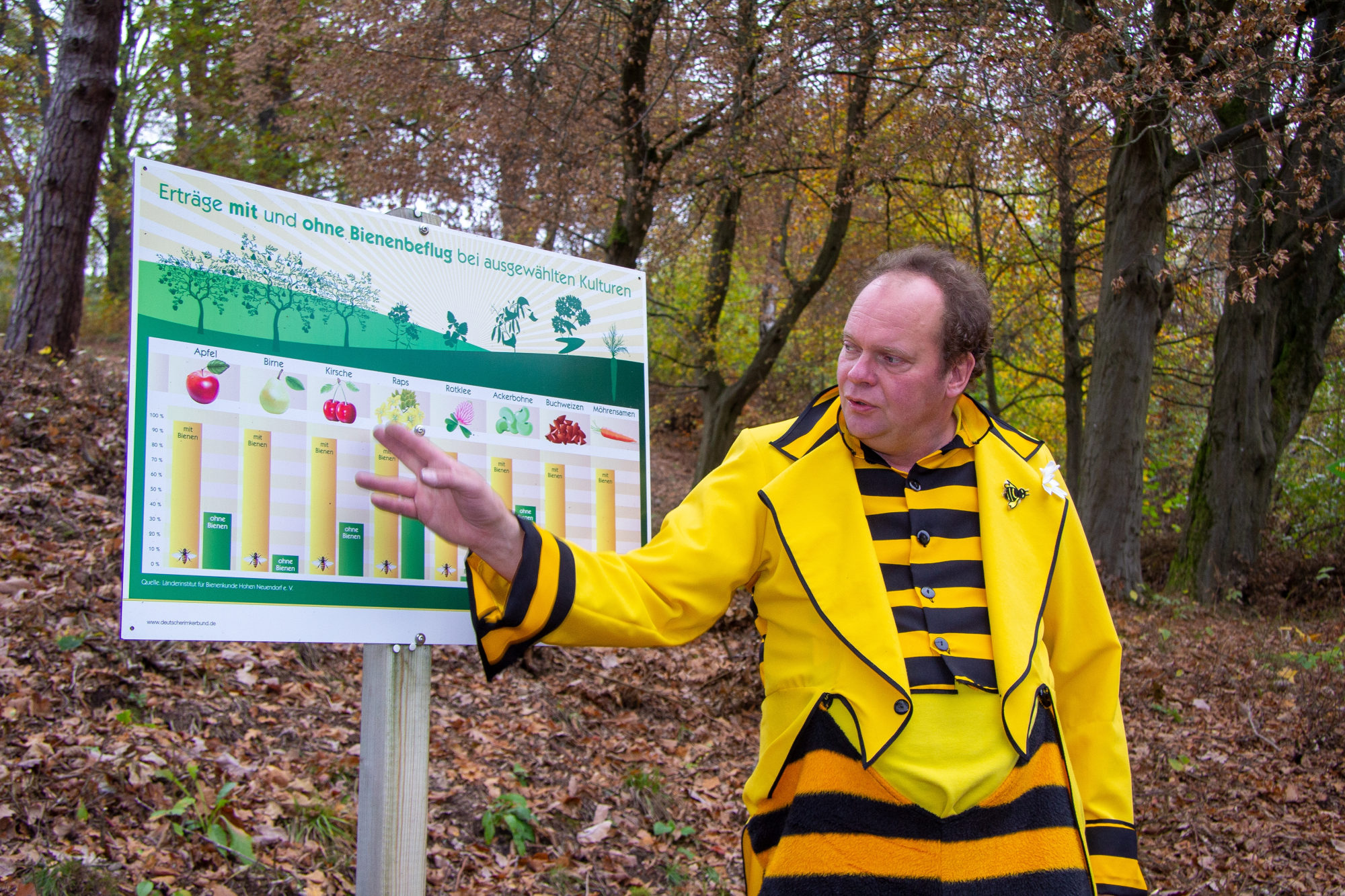
On the steep, roughly 500-meter-long serpentine path, visitors can learn a lot about Apis Mellifera, the honeybee, and its priceless value for humans. This value goes far beyond its role as a producer of honey and wax and lies above all in the bee’s tireless pollination efforts. One of the first information boards therefore points out this ecological importance of the striped insect. Everyone can read about it on the freely accessible bee trail or do as we do. We let Henning Illers lead us into his world. And it would be only half as authentic if he weren’t standing before us in his yellow and black bee costume. Some people smile at him for that, but many others take selfies with the passionate beekeeper.
The educational route leads past small flower meadows, various beehives as examples of so-called “bees” and the large insect hotel. Alongside many hand-painted bee pictures stands a photo wall. Two face-sized openings invite visitors to the trail to merge with the funny bee motif for a photo. “My wife Steffi painted all of these,” the guide proudly announces, and quickly adds: “The bees are our shared hobby.”
From April to September, you can marvel at the lively activity of around 2000 bees in a display case and, right next to it, watch the foragers at work in the herb garden laid out in 2018. Retired gardener Jean Pierre Signard, who also volunteers to look after the Wieda Harz Club hiking trails, added blooming “bee destinations” for this purpose.
In autumn and winter, however, the display case on the bee trail is deserted. Peace returns to the bustling bee colony as it faces the challenge of surviving the cold season. Fewer than 2000 bees from a colony (in summer there are 60,000 to 70,000!) gather in a large cluster and keep each other warm by taking turns. The bees on the outer edges take in food and raise their body temperature through metabolism, then crawl into the inner part of the cluster and pass on their warmth to the others. Here, at a constant 25 degrees Celsius, the queen also overwinters — the “Weisel”, as the beekeeper calls her.
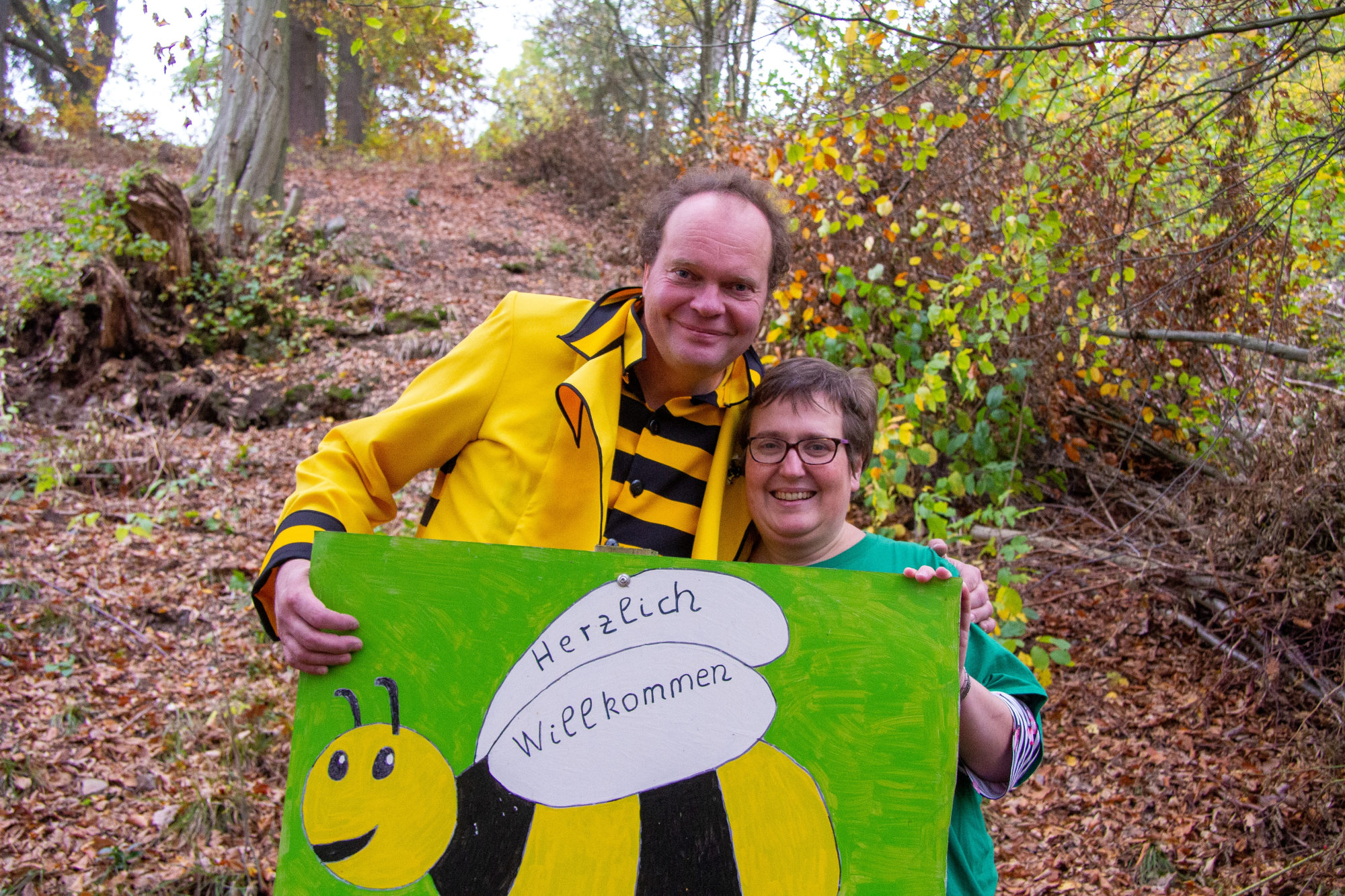
The two certified beekeepers have much more to do during this time: "In autumn we fit all the hives with mouse guards, and in winter we take care of cleaning the brood frames." That’s very time-consuming. The fragile wooden constructions have to be cleaned, boiled and refitted with wax foundations. There are 44 frames in a single hive, which is used by one bee colony. For the Illers’ honey, more than 30 colonies work at four locations, from Braunlage via Wieda to Walkenried. That adds up to a four-digit number! If the brood frames aren’t renewed, the bees will swarm in spring and move elsewhere to build their own wax nests.
Steffi (from Münsterland) and Henning (from the northern Harz region) Illers settled elsewhere in 2009, namely in Wieda. On a sunny property with lots of colourful flowers, fruit bushes and trees, as well as red and white grapes growing on the house. "Our hardworking bee colony right here in the yard gives us abundant harvests," says Steffi Illers with shining eyes. "We then make juices and jams from it." Alongside honey and beeswax candles, the sweet grape juice and the flavourful currant jam also carry the Typical Harz label. Natural products that are completely free from additives such as artificial flavourings. "I grew up on a large farm near Bockenem with huge fields that my father farmed conventionally," says the almost two-metre-tall man in the beekeeping suit thoughtfully. "So-called 'weeds' and 'pests' were ruthlessly poisoned and eradicated." He has resolutely turned his back on such methods: "That can’t be the right way to treat nature!" However, his parents’ farm also made use of bees, keeping several colonies. "So I came to bees as a child!" jokes Illers. He returned to it after moving to the Harz, at the age of 41, having trained as a chef. In poor health, he now spends a few hours caring for Alzheimer’s patients on behalf of the mobile care service that also employs his wife as a nurse. He found a new field of activity in hobby beekeeping: "I use the bees as a bridge to dementia. The bright suit helps a lot," explains Illers, visibly pleased with this unconventional approach to care.
"Hello, my dears! Is everything all right?" Henning Illers gently taps on the Styrofoam wall of his preferred Seeberger hive and presses his ear against it. "When I hear a quiet humming, then everything’s fine." The colonies that spend the winter outside at their locations are checked all the way into spring. With the first warm rays of sunshine, the hive comes back to life, the foragers fly out, and the queen lays her first eggs. Most of them go into the small cells for worker bees, some into larger drone cells, and a few into queen cells — the breeding place for future queens. This is the place where the beekeeper can control the development of his colonies, which must therefore be checked at least once every seven days, and where Henning Illers has even helped several times with the exhausting emergence of new bees.
Only later in the conversation do Steffi and Henning Illers reveal that they like to help and volunteer. For example, they provide information about bees at the Mother-and-Child Home in Altenau and make candles from wax together with spa guests. Or that Henning Illers took over the chairmanship of the local Harz Club branch in 2015, since then recruiting 70 (!) new members and ensuring the creation or repair of several rest areas and shelters. The Illers also initiated a joint project between Harz Club members and young people from the Technical Relief Agency’s 2016 summer camp to awaken the barely visible but still enclosed paths around the bell tower from their Sleeping Beauty slumber. That became the foundation of today’s Bee Trail. At the Brunnenbachs Mühle school camp south of Braunlage, where the Illers’ bees are already busy collecting tasty forest honey, children are to be introduced even more closely to beekeeping in the future. Protective suits in small sizes have already been ordered. But that’s just a side note.
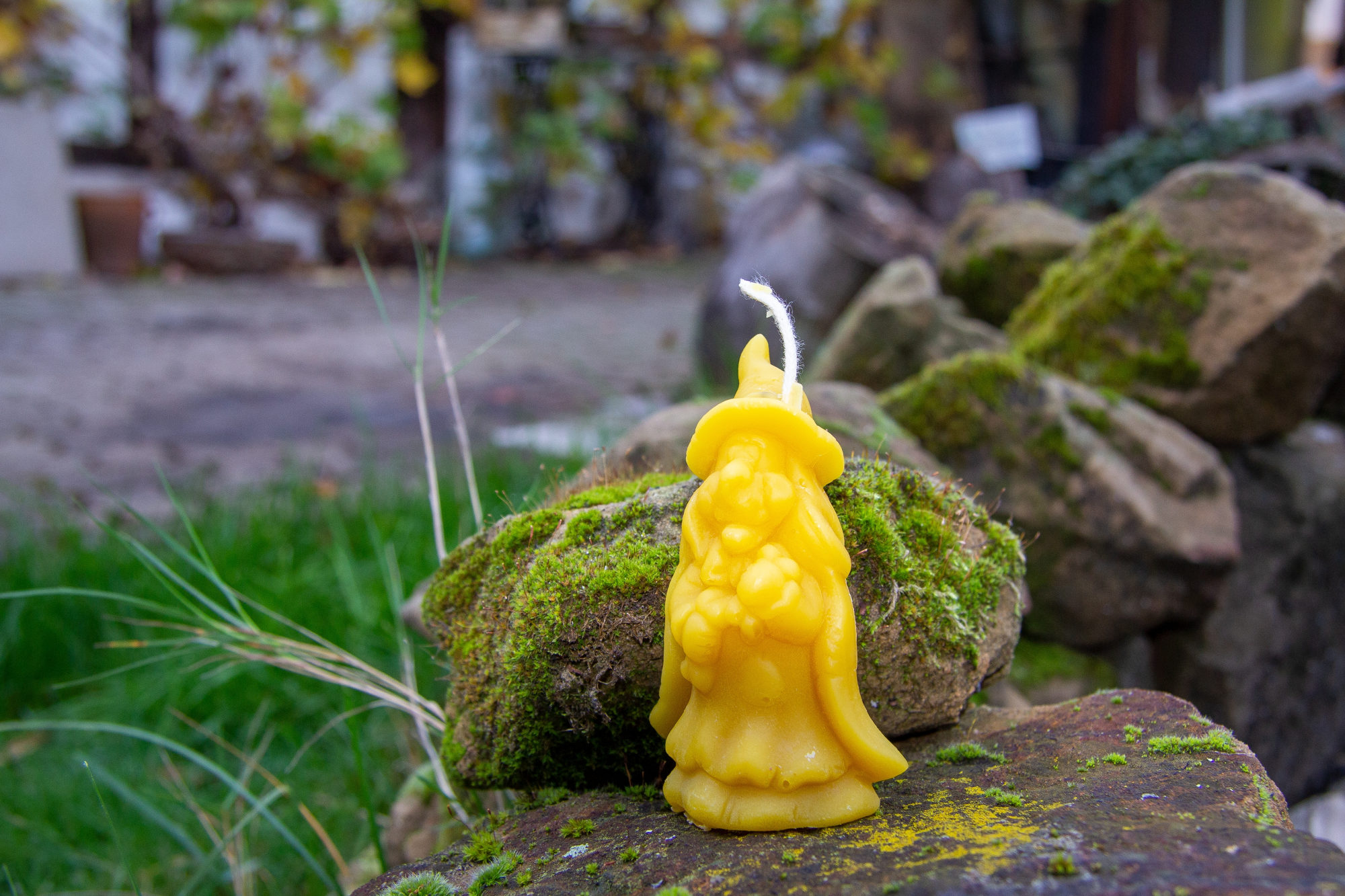
Then comes the harvest in summer! From July onwards, the bee man checks the ripening honey more and more often for its water content until it reaches about 15 per cent. Then the honey is extracted and sealed airtight in buckets. As a replacement, the bees receive their first partial feeding, a sugar solution. Before the honey is filled into jars and labelled, Illers stirs the precious mass until creamy at around 35 degrees Celsius, the internal temperature of a summer beehive. "We distinguish between early-season honey and summer honey," explains Steffi Illers. "Since different flowering plants dominate depending on the weather, our honey also varies from year to year. In 2019, for example, our bees mainly collected dandelion pollen in spring. That tastes different from linden or rapeseed." And once the honey processing is finished, the wax is put to use. In the melting pot, the wax changes its state of matter and then, at 80 degrees Celsius, flows into various silicone moulds to cool down as an angel, Santa Claus, beehive, or witch. In any case, always as a candle. "Beeswax has a higher density than, for example, paraffin. That’s why our candles also burn much longer."
The stories surrounding beekeeping seem to be endless for the bee man, who sees himself as an ambassador for the Harz. For example, that bees orient themselves by colours and that the beekeeper therefore paints the hives in different monochrome shades, or that bees have to fly out 20,000 times and visit about five million flowers to produce 300 grams of honey, that he himself gets stung more than 50 times a year and loves eating bee sting cake!
by Thorsten Schmidt (2020)
-
Illers Beekeeping
Waldstraße 18
37445 Walkenried district Wieda -
+49 5586 301689