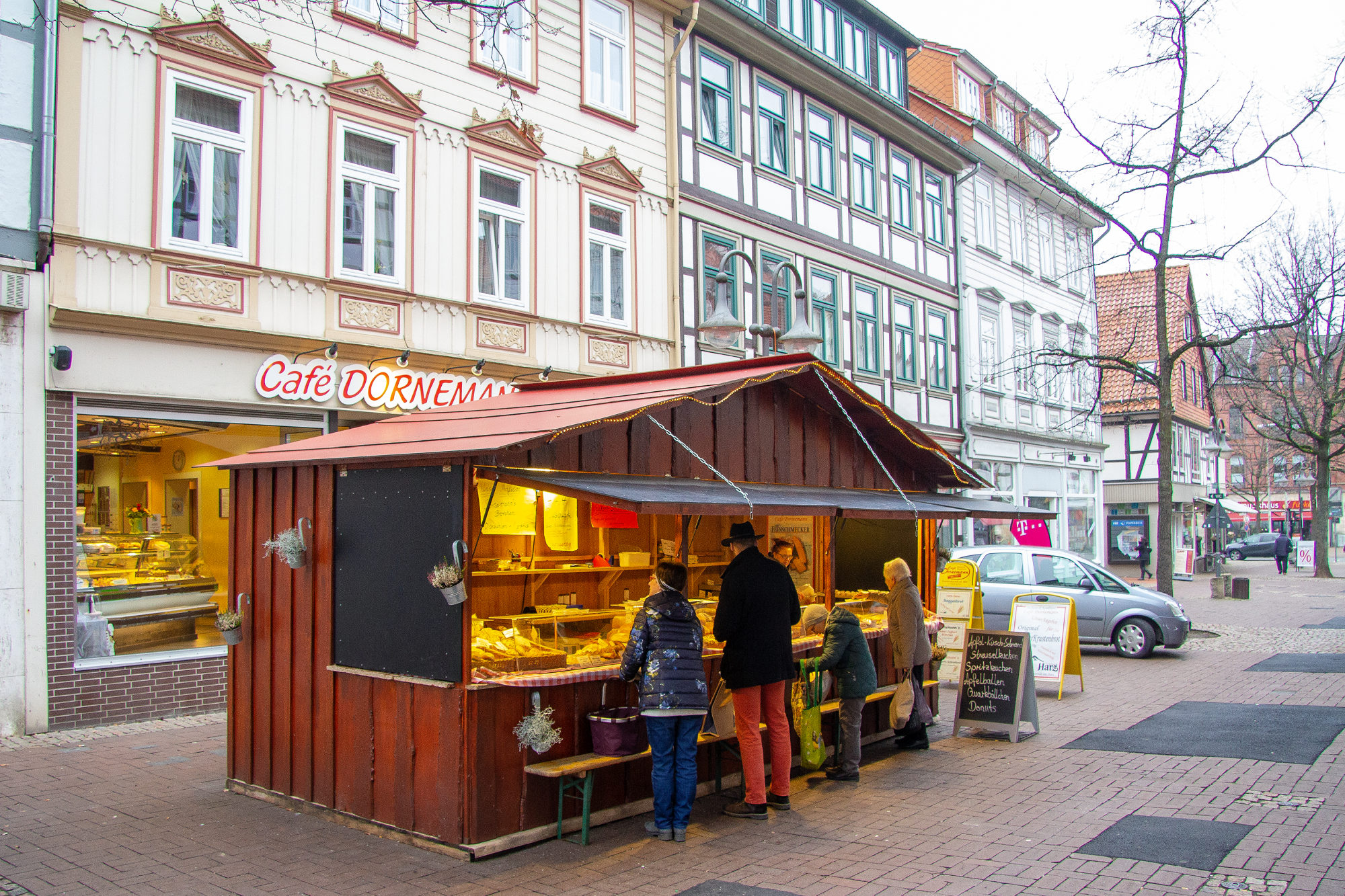
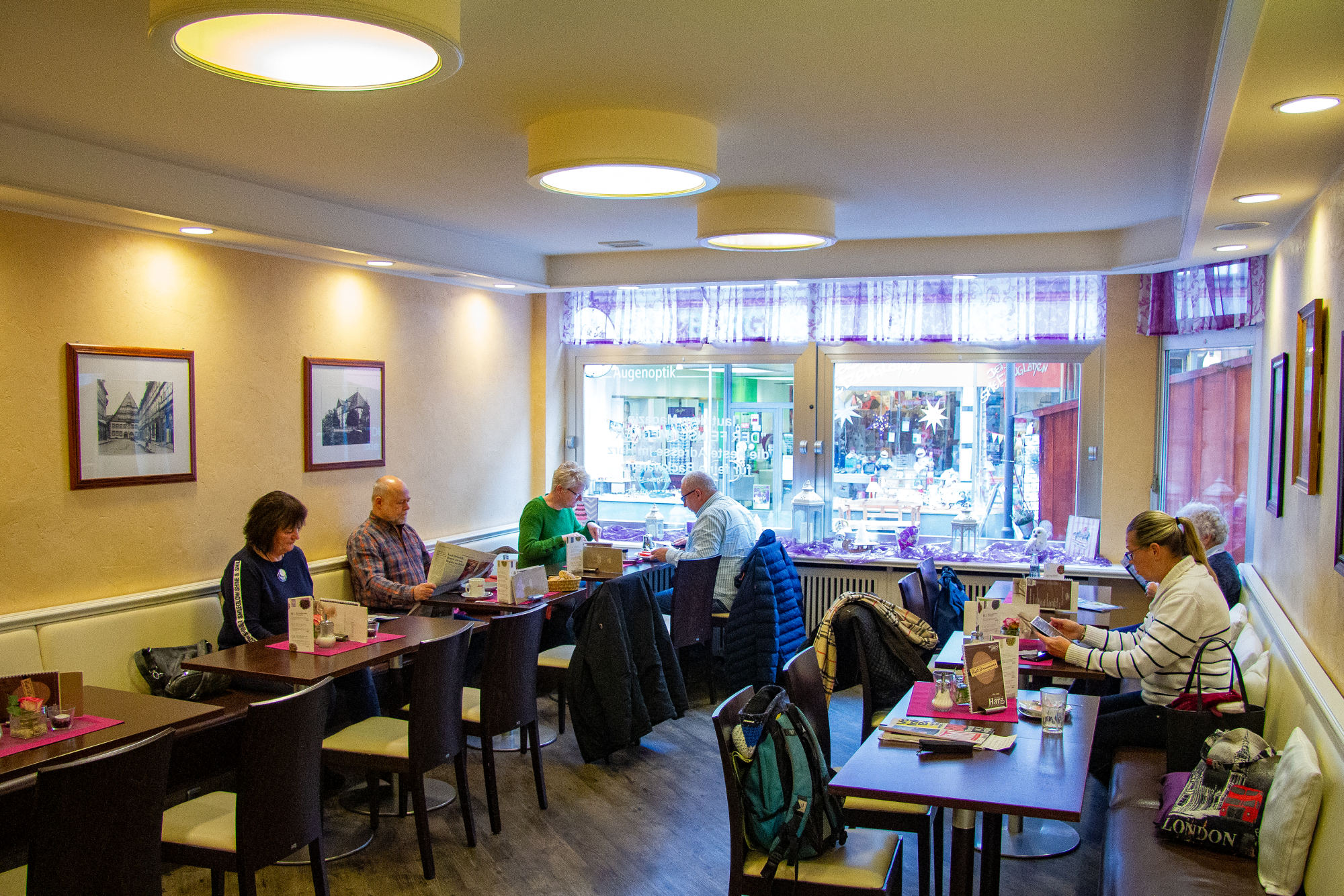
"This is our PowerBrocken!" With a lively gesture, Jörg Dornemann places a rectangular loaf of bread on the café table and quickly adds: "Completely without flour or yeast!" We look at him questioningly, and he cuts us two slices: "Go ahead, give it a try!" So, it can be cut easily and spread with butter, as it turns out. It’s moist, grainy and has a pleasantly strong flavour. Our verdict pleases the master baker, yet he himself doesn’t seem completely satisfied: "I might try it with a little less salt. Maybe I’ll use almonds instead of hazelnuts…" But not today, because the head of the traditional bakery in Osterode will reclaim the sleep he missed during the night in the afternoon.
Craftsmanship lives from manual work. Bread rolls, croissants, pretzels. Everything is weighed and shaped by hand. "We handle each roll at least four times by hand," explains Jörg Dornemann. He uses machines for stirring, kneading and rolling — for example, puff pastry. For the master baker, it’s a matter of course to prepare the sourdough made from rye flour, which he needs for his popular breads, in the traditional way himself. It happens every Saturday: with the help of his own starter culture, he begins the fermentation process for 180 litres of natural sourdough. This is followed by 36 hours of mixing and resting phases until the leaven reaches exactly the right consistency and flavour needed for the unique Dornemann breads. Especially for the Harzer Crust Bread, which has been honoured with the “Typical Harz” label and helped the renowned trade magazine "Der Feinschmecker" to name the Osterode bakery twice as the best address for baked goods in the Harz region. But also the 100% rye bread, the Pirate Bread with ham and onions, wheat, rye and wholemeal rolls as well as egg wreaths and Harzer sour cream cakes (both also awarded “Typical Harz”) convinced the testers. To keep his high quality constant, Jörg Dornemann commissioned the German Bread Institute in Berlin to regularly test his products.