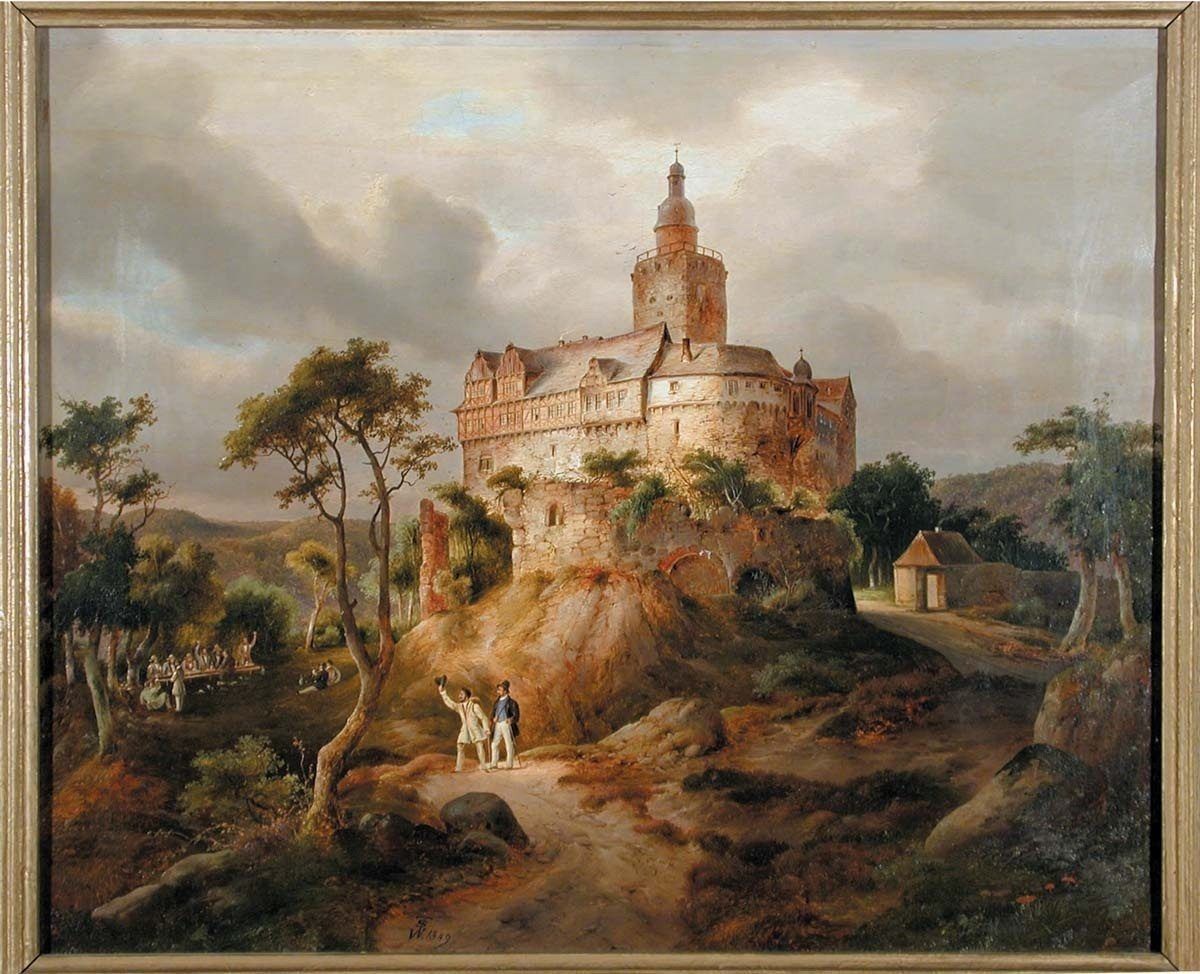
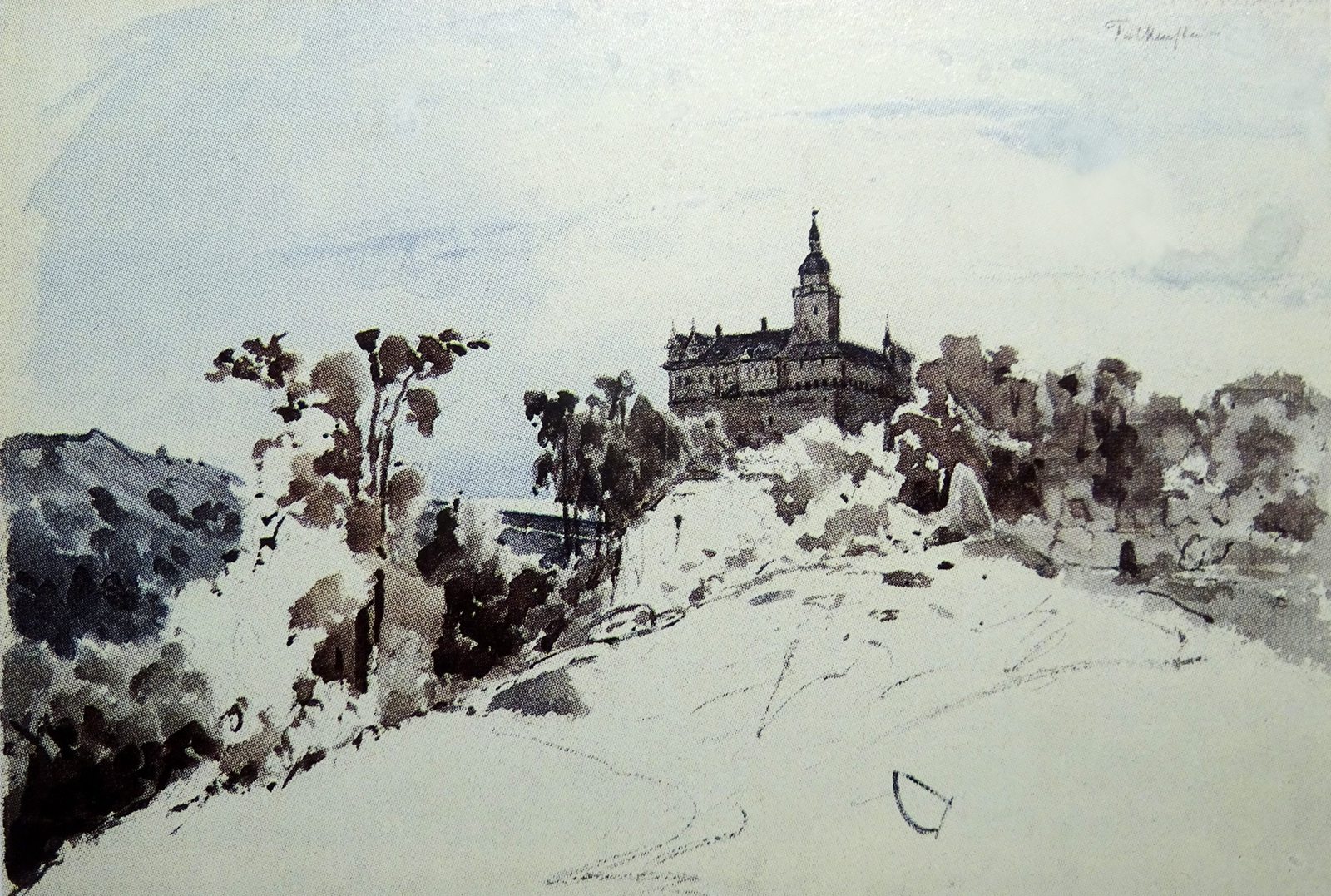
What was so fascinating about Falkenstein? The castle is a large complex, even visited by medieval emperors, where all the typical castle elements have been preserved: the outer bailey, the kennel, the keep, the great hall. It once hosted famous figures; Eike von Repgow is said to have written his ‘Sachsenspiegel’ here, the most important law book from the Middle Ages to modern times. But Falkenstein also offers a special natural experience: according to old travel guides, one was supposedly able to see the Inselsberg and Erfurt from the keep, which is probably a bit of an exaggeration. What is true, however, is that the castle is situated high above the Selke Valley, surrounded by vast deciduous forests and yet centrally located: from Mägdesprung or Ballenstedt it takes two or three hours on foot. In addition, autumn is a splendid painter each year, and spring, in its tender green, is just as lovely. A small slope east of the castle gives a surprisingly wide view of it. Last but not least, the castle owner ensured the preservation of the building and offered refreshments, even accommodation for hikers, as early as 1800. He even hired a caretaker especially to give guided tours of the castle.
So, as so often, it’s the combination that makes it special. That’s why people came from all over: Dresden painters such as Adrian Ludwig Richter and Ernst Ferdinand Oehme; from Hamburg, Jacob Gensler and Friedrich Wasmann; from Berlin, Carl Blechen and Adolph Menzel; from Düsseldorf, many artists; from Kassel, Adolph Carl; and from Thuringia, Ferdinand Bellermann and Carl Hummel, to name only the best known. Each painting, in turn, added to Falkenstein’s fame. Incidentally, the castle was also the filming location for many DEFA fairy-tale films and has thus shaped how today’s generations imagine a medieval castle.