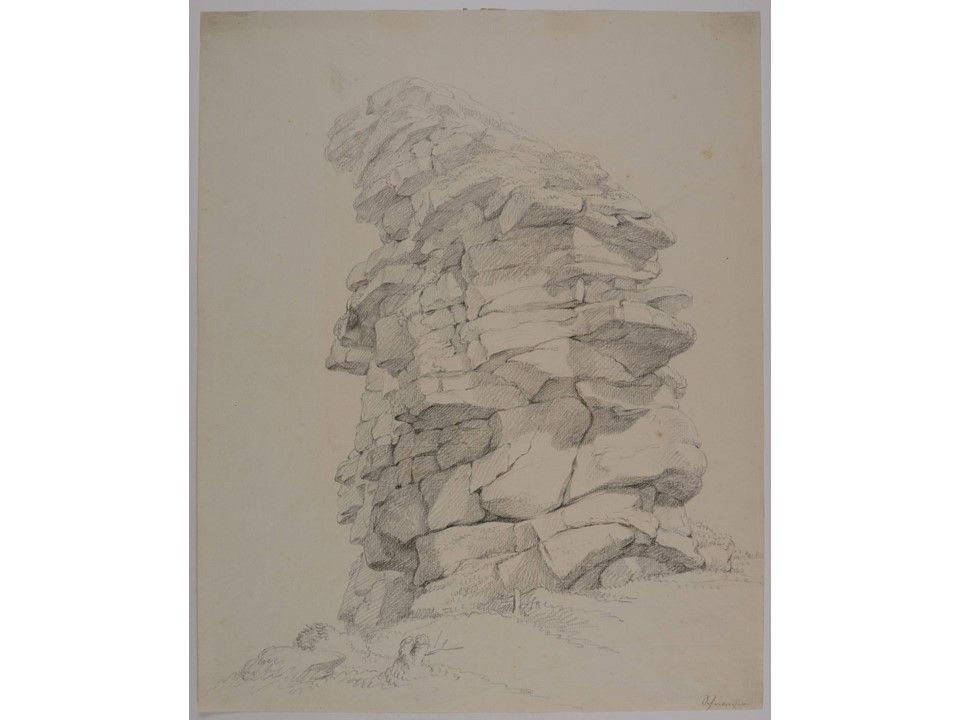
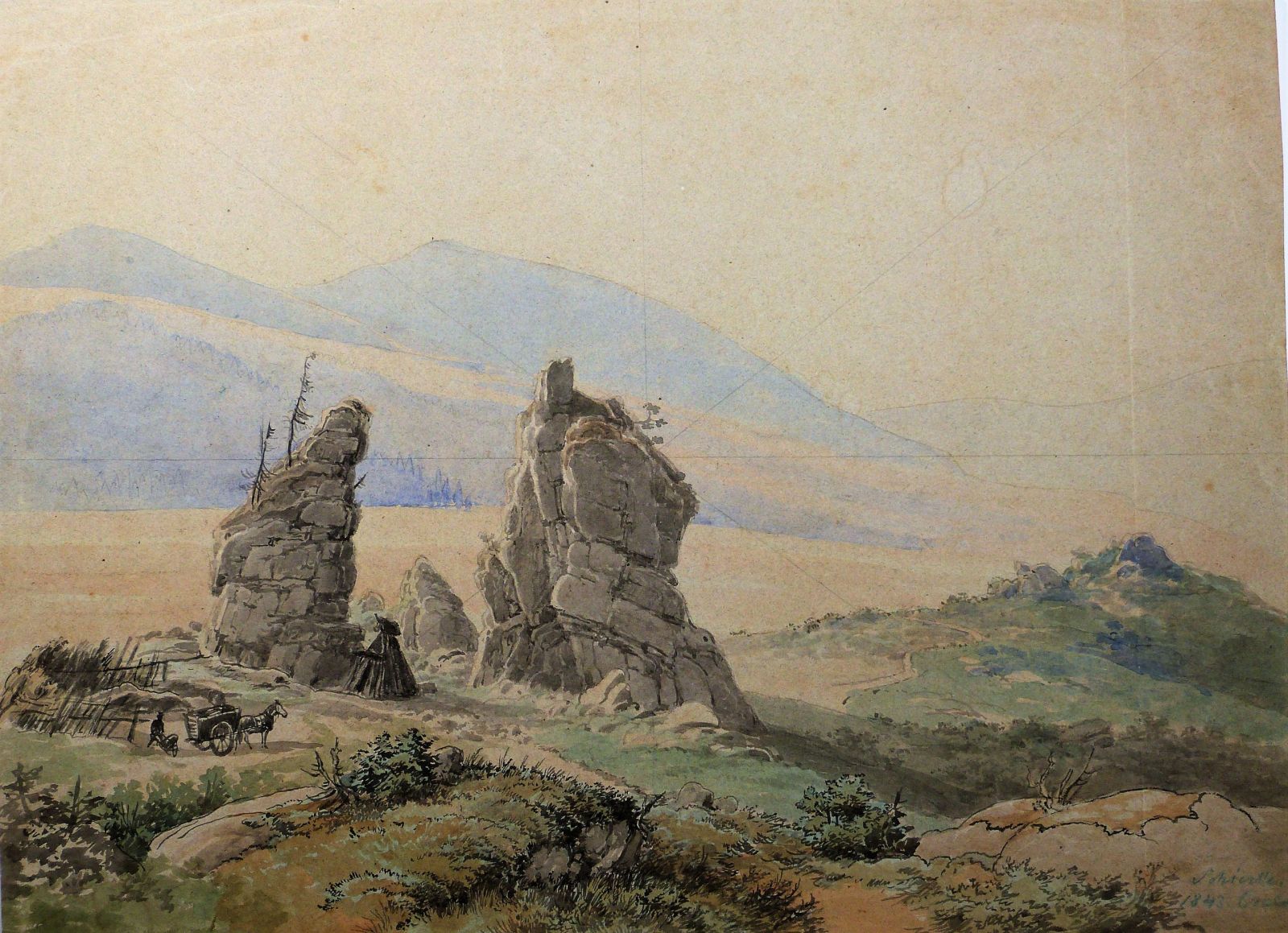
These two cliffs caught attention early on, partly because of their distinctive twin-tower shape and also because of their height of almost 30 metres. The large Schnarcherklippe can be climbed today. Goethe and the artist Georg Melchior Kraus drew the small Schnarcherklippe on 5 September 1784. Kraus carefully sketched the granite’s spheroidal weathering. Where wind and rain had a stronger impact, the erosion was also more pronounced. Meanwhile, Goethe studied the rock of the large cliff and discovered that the granite deflected the magnetic needle of his compass. He noted this with astonishment in his geological diary. Where the deviation was strongest, he marked small signs on the rock.
Whether the small Schnarcherklippe actually produced distinctive snoring sounds that day, we don’t know. For that to happen, a strong wind from the southeast must be blowing. But in Faust Goethe captured his memory of this visit in verse, as he placed his Walpurgisnacht scene here between Schierke and Elend: “And the cliffs that bow, / and the long rock noses, / how they snore, how they blow”.