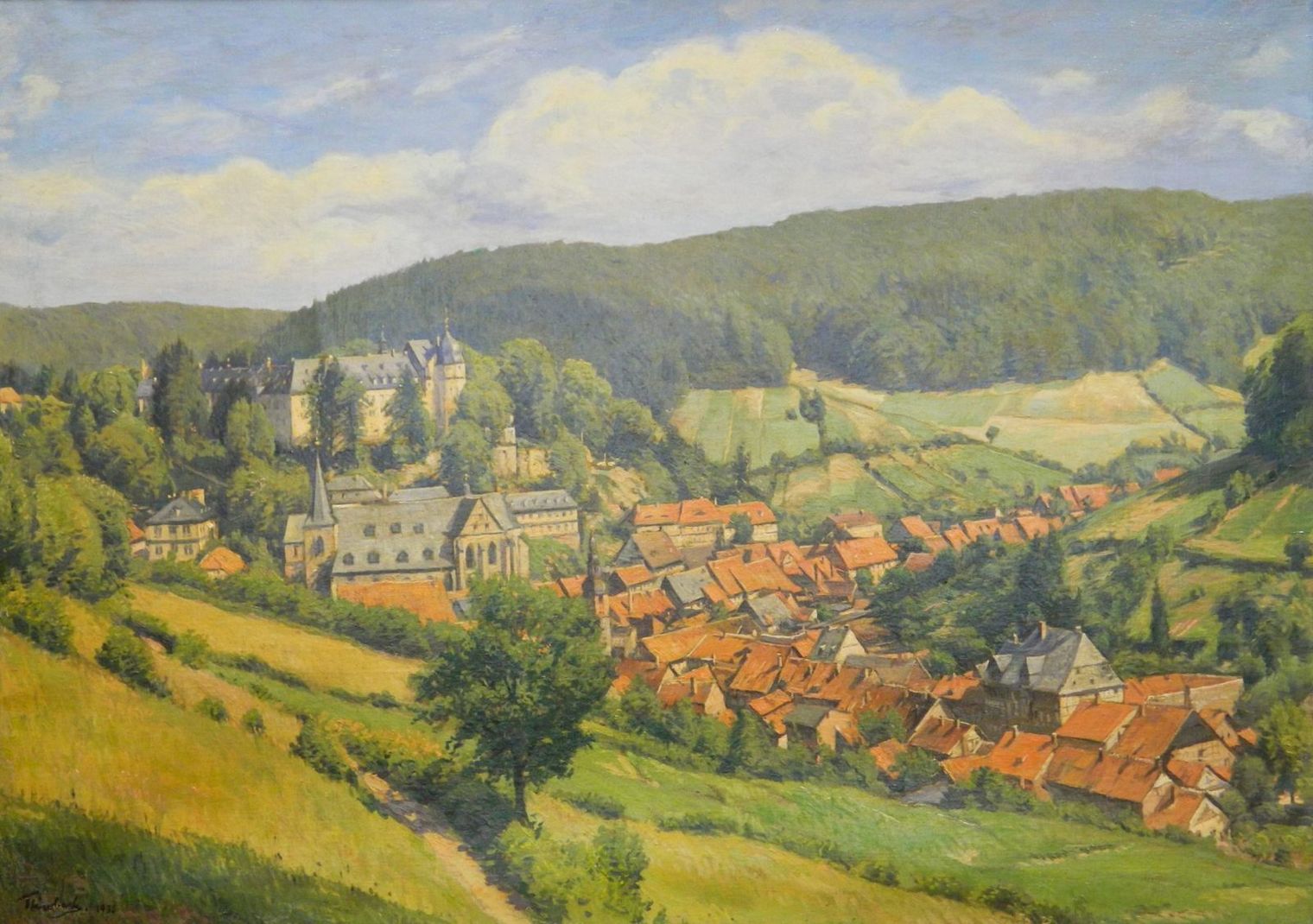
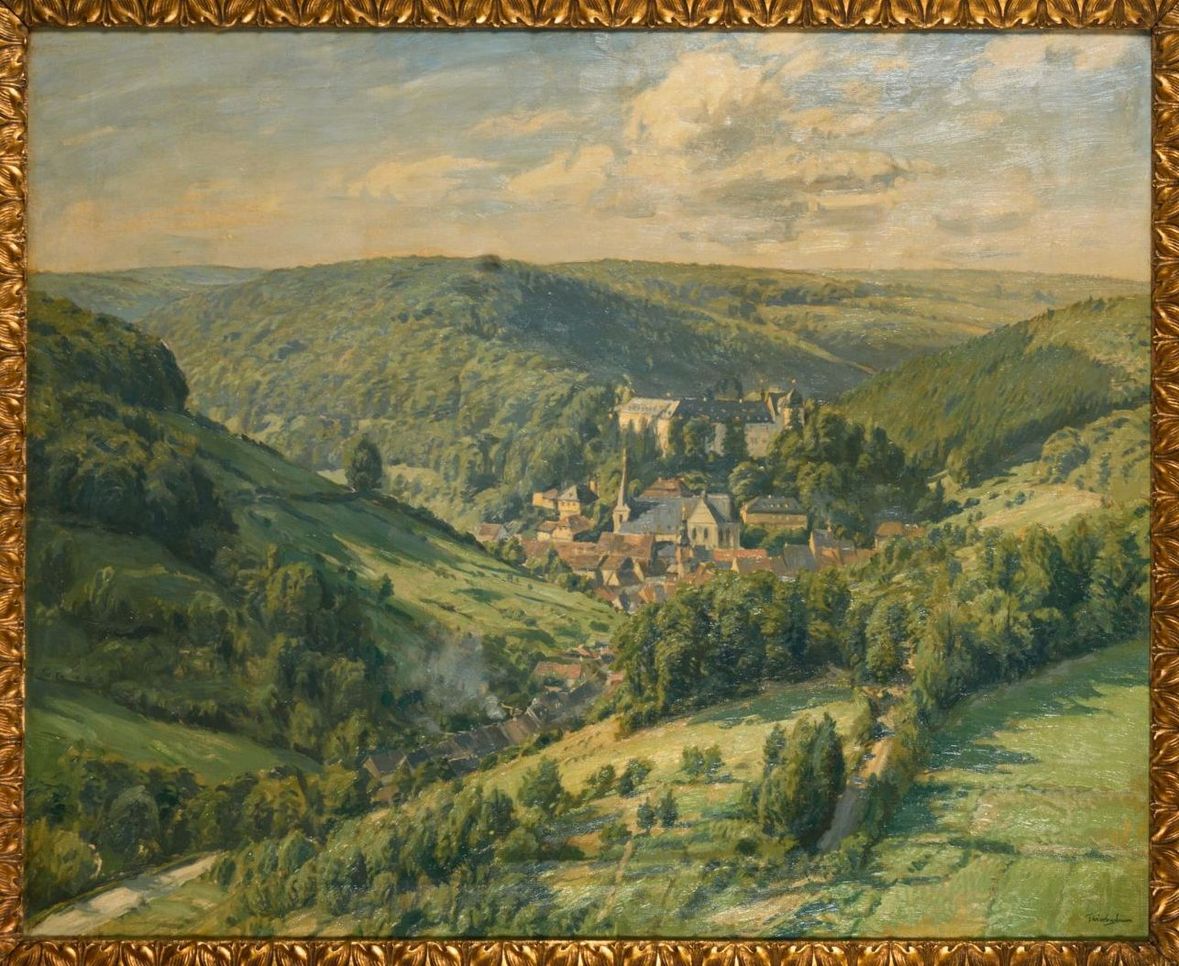
This painter’s view is the most beautiful one of the half-timbered little town Stolberg – just like something out of a picture book. The spot near the Luther Beech is also a checkpoint of the Harz Hiking Badge. Luther himself once stood here in 1525 and, inspired by the beautiful view, began to write poetry. You can read about it on a plaque at today’s Luther Beech. The castle, the church on a terrace below it, the roofs of the town, all framed by friendly deciduous forests and the mountains. Everything is still as it was back then, even if a few more houses may have been added. To the right, the outstanding building of the Old Mint of Stolberg dates from 1535, housing a lovingly designed museum. The town still has only about 1,200 inhabitants today.
It was precisely Stolberg’s charm – the narrow valleys – that hindered its economic development, along with its location far from major transport routes. But Stolberg was once a residence. A small group of employees and officials ran the household for the Counts of Stolberg-Wernigerode. Even around 1940, there were still stables behind every half-timbered house. Goats, cows, and cattle were driven out to pasture every day. Only one biscuit factory (Friwi) has existed here since 1891, and it still bakes today.
Several painters came from Stolberg. Ernst Helbig, who created the Painter’s View in Ilsenburg, was the son of a gardener. Richard Thierbach was the son of an official. There were no real opportunities for artistic growth or sale here. Only Thierbach returned in 1897, famous and just 37 years old. He lived here until his death in 1931. Stolberg/Harz became the favourite motif of his paintings, which he exhibited and sold all over the world. Soon, other Berlin colleagues followed — repeatedly Hermann Schnee, a professor in Berlin. The views from the Luther Beech, into the Stolberg Thyra Valley or along Ritterstrasse, became popular painter’s views.