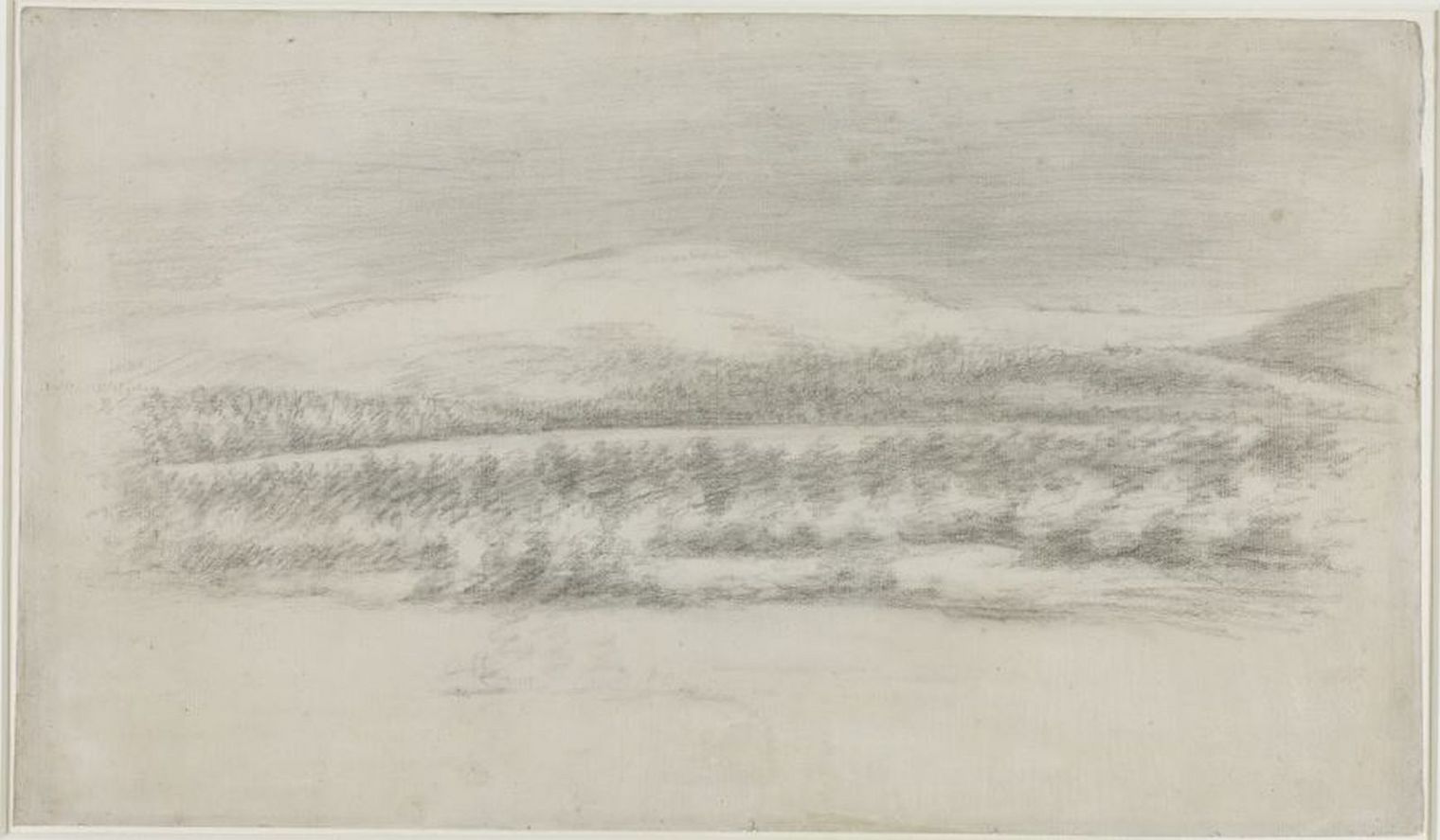
Anyone who climbs the Brocken from Torfhaus has, in good visibility along the boardwalk through the Torfhaus Moor, the same view that Goethe sketched here. Everything can look just as Goethe described it, if you're there at the right moment. After climbing the mountain on 10 December 1777, Goethe spent the night in Torfhaus with the forester. When he stepped outside again later that night, the moon was shining over the Brocken. The next day, in Clausthal, he recorded it from memory, as his horses and luggage had been left there—along with a large sheet of paper.
In Goethe’s time, there were fewer than 300 people up here. Today there are over 600,000. For a long time, the paths have been fenced off to manage the visitor streams. There’s no other way, as the mountain would otherwise disappear under the feet of the crowds. Off the paths, entry is strictly forbidden — this is the core zone of the National Park. This is to preserve this sensitive and magnificent place! After all, the Brocken is the highest and most popular mountain in northern Germany — a true landmark. But it’s also a water reservoir, a weather maker, and, because of its wilderness, a home to ancient legends.
Goethe’s imagination, too, was inspired by Walpurgis and the witches on the Blocksberg (the old name for the Brocken). Yet nothing could have felt more natural than this climb, even though the area had been shrouded in thick fog for days. The daring Goethe simply turned up at the forester’s early on the morning of 10 December. The forester thought the climb was impossible since visibility was less than three steps. But Goethe waited patiently and hoped. Unexpectedly, the fog lifted. It was a quarter past ten in the morning, and the forester changed his mind. By one o’clock they stood on the summit, and by nightfall they were back. On the way, Goethe discovered what Leonardo had already taught painters: shadows are coloured and change with the position of the sun — they reflect the light of their surroundings.