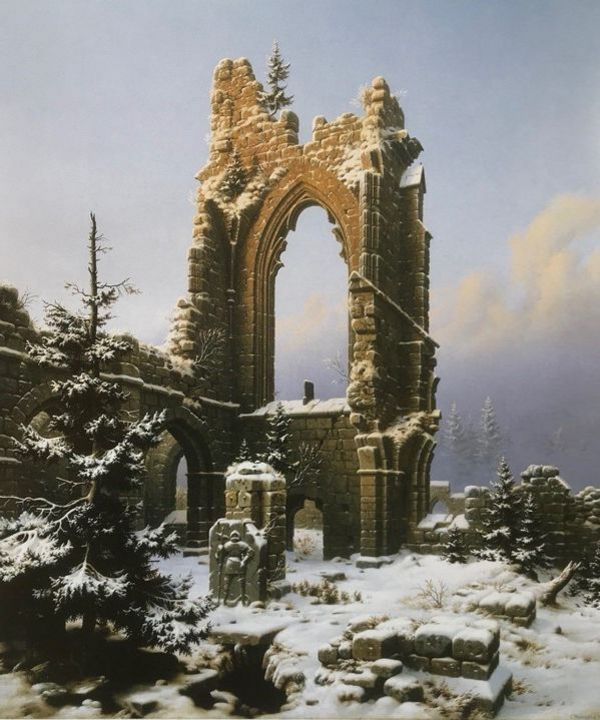
Walkenried was the most popular monastery ruin among painters in the Harz, a true paradise for artists. Our location is inside the former church, looking out towards the large west window. The enormous dimensions of 90 metres in length now radiate emptiness, as only a few remnants have been preserved. But just imagine how many stones once had to be quarried, transported, shaped, polished and, above all, set on top of each other!
Here there was a sense of forest solitude, as is typical for Cistercian foundations. Now the monastery lies in a small, charming village. The cloister next to the church, once the monks’ residence, has been transformed into an interesting museum. There you can learn more about this largest monastic church in northern Germany, built by the Cistercians between 1206 and 1290. You’ll find out about architectural and especially mining know-how that the Cistercians brought from France thanks to their international order structure, as well as about princely tax privileges, investments and success. Walkenried and the Upper Harz mining area are now even part of the UNESCO World Heritage.
But more than 200 years ago, when this painting was created, everything here was silent and desolate. Artists opened people’s eyes to the significance of the ancient walls. In 1817, the ongoing use as a quarry was finally stopped. In his painting, Carl Hasenpflug expresses both sorrow and joy, something we usually only associate with beautiful music.