Our location is the Charcoal Burners’ Museum at the Stemberghaus, because it represents the black craft that has now almost completely died out, with only a few traces remaining.
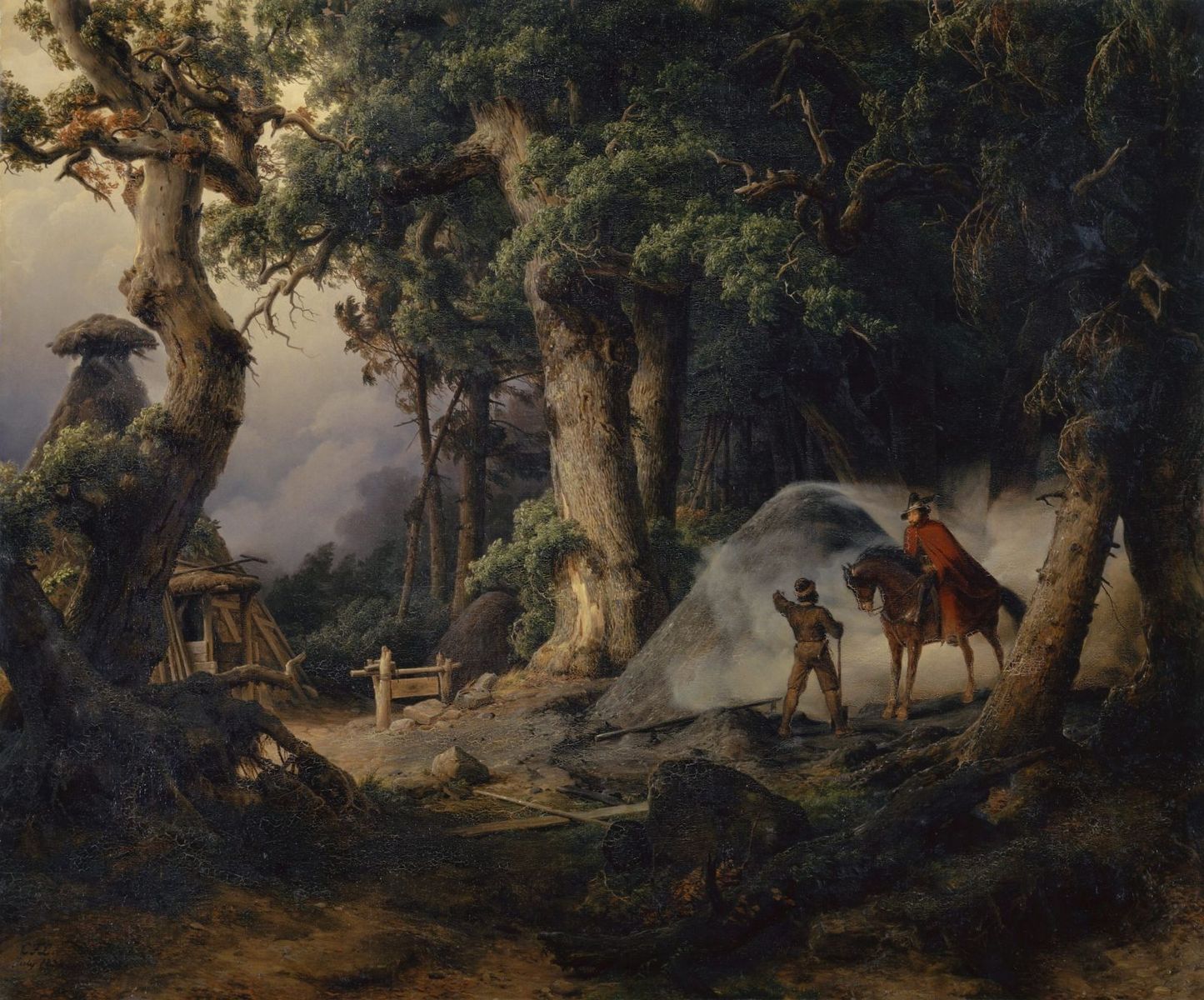
Only 250 years ago, circular plateaus had been levelled every few kilometres along the valley slopes — these were the charcoal burners’ sites with their smouldering kilns. Such a kiln would smoulder for over a week, extracting three quarters of the water from the wood. The skill was to make sure it didn’t catch fire. What mattered most was an ingenious shape and the control of the air supply, often regulated by nimble children who ran lightly over the hot covering. When the forest had regrown, the charcoal burners returned, as it was important to keep the routes to the many smelting works short. There, for smelting only ten silver thalers (167 grams), they needed 260 kilograms of charcoal, which had to be produced from one and a half cubic metres of beech, birch or oak. A tree had to grow for at least forty years for that. Now you just need to multiply this by the millions of silver thalers produced each year.
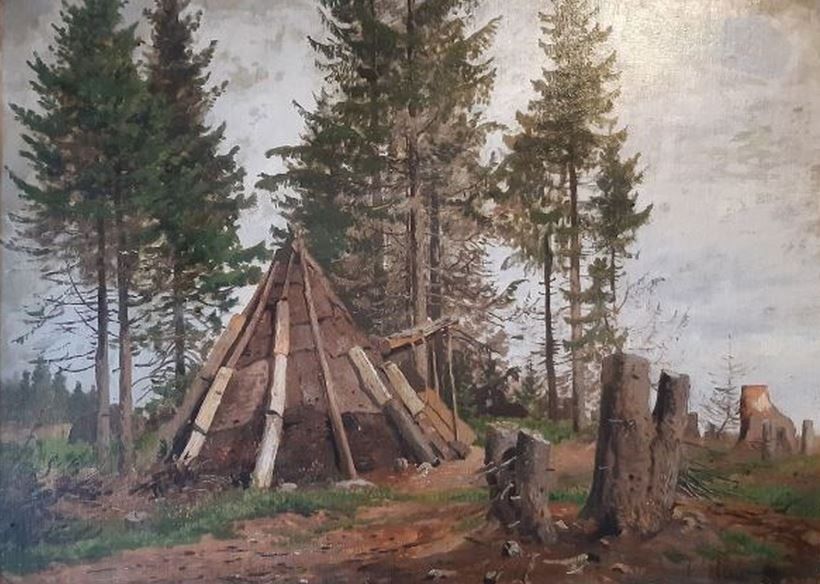
In 1880, Wilhelm Nabert found the last lonely relics of charcoal burning, the so-called living huts or “Köten”. In his painting, the hut is deserted, grass is already growing around it. The spruce trees had been cut down to human height. So it was no longer necessary, as around 1700, to burn all the stumps into charcoal. Charcoal burning was in decline because mining was also decreasing. This was the time when painters nostalgically discovered the art of the “black fellows” as a subject. The beautiful painting takes us back to a time of growing poverty in the Harz. Where did the charcoal burners go when they no longer moved to the next kiln? To the cities, to America. The end of 3000 years of mining in the Harz was approaching.